
For many years, destination websites followed a familiar formula.
Publish hotel guides.
List attractions.
Recommend restaurants.
Add a few maps.
Offer booking links.
Optimise everything for search engines.
That model helped millions of travellers plan trips, but the way people discover destinations is changing rapidly.
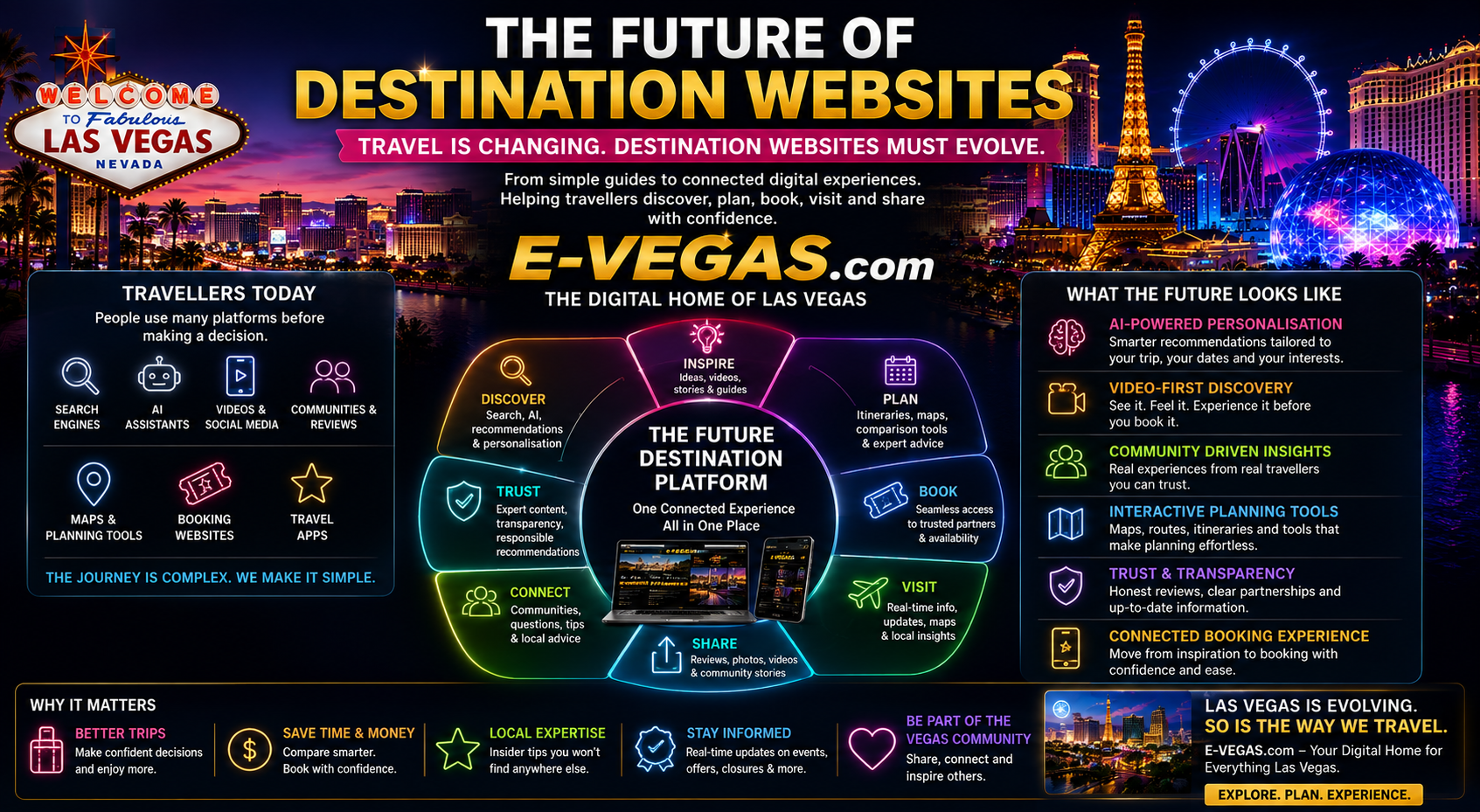
Travellers now move between search engines, artificial intelligence tools, social media, short-form video, online communities, maps, review platforms and booking websites before making a decision.
The traditional destination website is no longer competing only with other travel websites.
It is competing with an entire digital ecosystem.
To remain useful, destination platforms must evolve from static collections of articles into trusted, connected and personalised travel environments.
The Old Model Was Built Around Information
Traditional destination websites were designed to answer straightforward questions.
Where should I stay?
What should I do?
Which attractions are worth visiting?
Where should I eat?
These questions still matter, but information alone is no longer enough.
Travellers can obtain basic answers almost instantly through search results, AI assistants, maps, review platforms and social media.
The modern challenge is not simply providing information.
It is helping people make better decisions.
From Information to Experience
The destination websites of the future will need to support the entire visitor journey.
That journey begins with inspiration and continues through research, comparison, planning, booking, travelling and sharing.
A visitor may first discover a destination through a video.
They may then ask an AI assistant for itinerary ideas.
Next, they might compare hotels, read reviews, watch room tours, explore maps, check ticket prices and join a community to ask questions.
After travelling, they may share photographs, videos and recommendations that influence the next visitor.
The best destination platforms will connect these stages rather than treating them as separate activities.
Artificial Intelligence Will Change Travel Planning
Artificial intelligence is making travel research faster and more conversational.
Instead of browsing ten separate articles, a traveller can ask a detailed question such as:
“What is the best three-day Las Vegas itinerary for a couple staying near the centre of the Strip who enjoy shows, food and outdoor adventures?”
That changes what destination websites must provide.
Publishing generic information will become less valuable.
Platforms will need clear expertise, reliable data, distinctive insights, original experiences and trustworthy recommendations.
AI can summarise information, but destination brands still need to create the knowledge worth summarising.
Personalisation Will Become Expected
Two visitors rarely want the same trip.
A family with young children has different priorities from a couple celebrating an anniversary.
A first-time visitor needs different advice from someone returning for the tenth time.
A budget traveller will make different choices from someone planning a luxury experience.
Future destination websites will increasingly personalise recommendations around factors such as:
Travel dates.
Budget.
Group size.
Interests.
Mobility requirements.
Previous visits.
Preferred pace.
Location.
Instead of showing everyone the same “Top 10 Things to Do” article, platforms will help each visitor build a trip suited to them.
Video Is Becoming a Search Engine
Many travellers now search for destinations through video before they read traditional guides.
Short-form clips can show a hotel room, restaurant, attraction or neighbourhood in seconds.
Longer videos can provide complete resort walkthroughs, reviews and itineraries.
Video helps travellers understand atmosphere in a way that text alone cannot.
Destination platforms that ignore video risk becoming disconnected from how modern audiences explore the world.
The future belongs to websites that combine written expertise with visual storytelling.
Communities Will Become Part of the Product
Travel advice becomes more valuable when it includes real experiences from real visitors.
Communities allow travellers to ask questions, share recommendations, report changes and highlight experiences that traditional guides may overlook.
This is especially important in destinations that change quickly.
A restaurant may introduce a new menu.
A show may change its schedule.
A hotel may renovate its rooms.
A new attraction may open.
Community discussion provides a live layer of information around professional editorial content.
The strongest destination websites will not simply publish to an audience.
They will help the audience communicate with one another.
Trust Will Matter More Than Volume
The internet already contains an overwhelming amount of travel content.
The next generation of destination platforms will not win by publishing the largest possible number of pages.
They will win by becoming trusted.
That means clear authorship.
Transparent commercial relationships.
Honest reviews.
Accurate information.
Visible corrections.
Responsible recommendations.
Useful comparisons.
Trust becomes especially important when websites earn commissions from bookings.
Commercial partnerships are not automatically a problem, but readers should understand how recommendations are selected and how the platform earns revenue.
Booking Must Feel Connected
Many destination websites inspire visitors but then send them elsewhere to complete every transaction.
That often creates a disjointed experience.
The future will be more connected.
A visitor should be able to move naturally from reading about an attraction to comparing dates, understanding prices, checking availability and completing a booking through a trusted provider.
The goal is not necessarily for every destination website to become a travel agency.
It is to make the transition from inspiration to action feel seamless.
Maps Will Become Interactive Planning Tools
Maps have traditionally shown where attractions are located.
Future maps will do much more.
They may help visitors organise activities by distance, identify travel times, compare neighbourhoods, create walking routes and understand how different experiences fit into a schedule.
For destinations such as Las Vegas, location can completely change the quality of a trip.
Two attractions may look close on a map but require significant walking time.
A connected digital platform can help visitors understand those practical details before they arrive.
Real-Time Information Will Become More Important
Travellers increasingly expect current information.
Opening times.
Event schedules.
Ticket availability.
Weather.
Transport disruption.
Crowd levels.
Temporary closures.
Special offers.
Static destination guides can quickly become outdated.
Future platforms will need stronger systems for checking, updating and clearly dating information.
A useful website should help visitors understand not only what is generally available, but what is relevant to their exact travel dates.
Destination Brands Must Think Beyond Google
Search engines will remain important, but relying entirely on search traffic creates risk.
Algorithms change.
Search features evolve.
AI-generated answers may reduce the number of clicks reaching traditional websites.
Strong destination brands will develop direct relationships with their audiences through:
Email.
Social media.
Video channels.
Communities.
Apps.
Direct visits.
Brand searches.
The objective is not to abandon search optimisation.
It is to build a brand people remember without needing a search engine to rediscover it.
E-Vegas.com and the Digital Destination Model
E-Vegas.com is being developed around this wider interpretation of a destination platform.
Rather than separating hotels, shows, attractions, restaurants, gaming, news and communities into unrelated projects, the long-term goal is to bring them together within one Las Vegas ecosystem.
The vision is not simply to publish more pages.
It is to help people discover, plan, compare, book, experience and share Las Vegas through one recognisable digital destination.
That means combining editorial expertise with video, community participation, travel tools, trusted partnerships and emerging technology.
The Destination Website Is Becoming a Platform
The future destination website will look less like an online brochure and more like a complete platform.
It will inform.
Recommend.
Personalise.
Connect.
Guide.
Update.
Inspire.
Enable bookings.
Support communities.
Learn from its users.
The change will not happen overnight, and traditional articles will remain valuable.
But the websites that thrive will be those that understand that travellers no longer want isolated information.
They want a connected experience.
The Next Era of Travel Discovery
Destinations themselves are constantly evolving.
Their digital identities must evolve too.
The next generation of travel platforms will not be defined by how many pages they publish.
They will be defined by how effectively they help people move from curiosity to confidence.
From dreaming to planning.
From planning to booking.
From booking to experiencing.
And from experiencing to sharing.
The future of destination websites is not simply about presenting a place online.
It is about creating a digital environment that becomes part of the journey itself.
- What is a destination website?
A destination website is an online platform that helps people discover, research and plan visits to a particular city, region or country.
- How have destination websites traditionally worked?
They have usually published guides covering hotels, attractions, restaurants, events and travel advice.
- Why is the traditional destination website changing?
Travellers now use search engines, AI, social media, videos, communities, maps and booking platforms together.
- Is written travel content becoming irrelevant?
No. Written content remains valuable, but it must become more useful, distinctive and connected.
- What is the biggest change affecting destination websites?
Travellers increasingly expect complete digital experiences rather than isolated pieces of information.
- What does a connected travel experience mean?
It means helping users move naturally from inspiration to planning, booking, travelling and sharing.
- How does artificial intelligence affect travel research?
AI allows travellers to ask detailed questions and receive personalised summaries quickly.
- Will AI replace destination websites?
AI may replace some basic searches, but trusted destination platforms will remain important sources of expertise and original information.
- What should destination websites provide that AI cannot create alone?
Original experiences, local expertise, reliable data, trusted recommendations and distinctive editorial insight.
- Why will original content matter more?
Generic information can be summarised easily, while original expertise gives people and AI systems something valuable to reference.
- What is personalised travel planning?
It is the process of tailoring recommendations to an individual visitor’s needs and preferences.
- What factors can personalisation consider?
Budget, dates, interests, group size, mobility, location and previous visits.
- Why are generic top-ten lists becoming less useful?
They provide the same recommendations to everyone regardless of their circumstances.
- Will top-ten articles disappear?
No. They may remain useful as introductions, but visitors will increasingly expect more specific guidance.
- How can destination websites personalise recommendations?
They can use questionnaires, filters, trip planners, saved preferences and AI-assisted tools.
- Why is video important for destination websites?
Video helps travellers understand atmosphere, scale and experience more quickly than text alone.
- What types of travel video are useful?
Hotel tours, attraction previews, restaurant reviews, itineraries, neighbourhood guides and short-form clips.
- Is short-form video replacing written guides?
Not entirely. Short videos inspire interest, while written guides often provide greater detail.
- Why should destination websites combine video and text?
Each format serves a different stage of travel research.
- What role do photographs still play?
Photography remains important for inspiration, comparison and understanding destinations visually.
- Why are online communities valuable for travellers?
They allow visitors to ask questions and learn from real experiences.
- What can communities provide that articles may not?
Immediate updates, personal advice, recent experiences and answers to unusual questions.
- Can community information be inaccurate?
Yes. Professional moderation and fact-checking remain important.
- Should community content replace editorial content?
No. The strongest platforms combine both.
- What is professional editorial content?
Content researched, reviewed and published under clear editorial standards.
- Why is trust becoming more important?
Travellers face a large amount of conflicting and commercially influenced information.
- How can destination websites build trust?
Through transparent authorship, accurate information, honest reviews and clear commercial disclosures.
- Why should affiliate relationships be disclosed?
Readers should understand when a website may earn money from a booking.
- Does earning affiliate commission make a recommendation unreliable?
Not automatically. Reliability depends on transparency, selection standards and editorial independence.
- What is editorial independence?
The ability to provide honest information regardless of commercial partnerships.
- Why are corrections policies important?
They show that a publication takes accuracy seriously.
- Why should articles include update dates?
Visitors need to know whether travel information is current.
- What kinds of travel details change frequently?
Prices, schedules, opening hours, offers, transport and attraction availability.
- Why is real-time information becoming important?
Travellers expect information relevant to their exact dates and circumstances.
- What real-time information might platforms provide?
Availability, events, weather, disruption, closures and current offers.
- Can destination websites guarantee all information is current?
No, but they can clearly date content and maintain strong updating processes.
- How will booking change on destination websites?
Booking opportunities will become more closely connected to editorial content and planning tools.
- Must every destination website become a travel agency?
No. Many can connect users to trusted booking partners.
- What is a seamless booking journey?
A smooth transition from discovering an experience to checking details and completing a reservation.
- Why do disconnected booking journeys create problems?
They require users to repeat research and navigate unfamiliar platforms.
- What role will maps play in future destination websites?
Maps will become interactive tools for planning routes, schedules and neighbourhood choices.
- Why are ordinary maps sometimes insufficient?
They may show distance without explaining walking time, transport or practical accessibility.
- Can maps help build itineraries?
Yes. They can group nearby experiences and reduce unnecessary travel.
- Why is location especially important in Las Vegas?
Resorts and attractions can appear close but involve long walking distances.
- What is a dynamic itinerary?
A schedule that adjusts according to time, location, interests and availability.
- Can AI help create itineraries?
Yes. AI can help organise options, but accurate destination data remains essential.
- Why will mobile usability remain important?
Most travellers use phones during research and while travelling.
- Should destination websites work differently before and during a trip?
Yes. Planning tools are useful before travel, while maps and live updates matter during the visit.
- What is meant by a destination platform?
A broader service combining content, planning, community, booking and technology.
- How is a platform different from a travel blog?
A platform supports more of the user’s complete journey.
- Will travel blogs still matter?
Yes. Strong editorial voices and specialist expertise remain valuable.
- What types of destination websites are most vulnerable?
Those relying mainly on generic, repetitive or outdated information.
- What types are best positioned for the future?
Trusted brands with original content, communities, tools and direct audiences.
- Why is brand recognition important?
People are more likely to revisit and recommend brands they remember.
- What is a direct audience?
Visitors who return through bookmarks, email, social media or brand searches.
- Why is relying entirely on Google risky?
Search algorithms and result formats can change.
- Does that mean SEO is no longer important?
No. SEO remains important, but it should support a broader brand strategy.
- What is brand search?
A search where the user specifically searches for a company or website by name.
- Why are brand searches valuable?
They indicate recognition, trust and direct demand.
- How can a destination website build brand demand?
Through useful content, memorable positioning, communities, video and consistent messaging.
- What role does email play?
Email helps platforms maintain direct contact with travellers.
- What can destination emails include?
Deals, events, planning tips, news and personalised recommendations.
- What role does social media play?
It supports inspiration, discussion, video discovery and audience engagement.
- Should destination websites be active on every social platform?
Not necessarily. They should focus on platforms that fit their audience and content.
- What role could apps play?
Apps can support saved plans, alerts, maps, bookings and on-trip guidance.
- Does every destination website need an app?
No. A high-quality mobile website may be enough for many platforms.
- How might augmented reality influence travel?
It could provide interactive directions, information and experiences at physical locations.
- How might virtual reality influence destination marketing?
It could allow people to preview hotels, attractions and destinations remotely.
- Will virtual experiences replace physical travel?
No. They are more likely to inspire or support physical travel.
- What is conversational search?
Searching by asking complete questions rather than entering short keywords.
- How should websites adapt to conversational search?
By answering specific questions clearly and providing structured, authoritative information.
- Are FAQs useful for conversational search?
Yes. Well-written FAQs can address detailed questions naturally.
- Should destination websites publish hundreds of thin FAQs?
No. FAQs should be useful, accurate and relevant.
- What is structured data?
Technical markup that helps search engines understand website content.
- Why is structured data important?
It can clarify information about organisations, events, reviews and other content.
- Will technical quality still matter?
Yes. Speed, accessibility, security and mobile usability remain essential.
- Why is accessibility important?
Travel information should be usable by people with different needs and abilities.
- What accessibility information should destination platforms provide?
Mobility access, seating, transport, sensory considerations and venue facilities.
- Why is inclusivity important in travel content?
Different travellers have different requirements and deserve useful information.
- What role does sustainability play?
Travellers increasingly consider environmental and community impact.
- Should destination websites discuss responsible tourism?
Yes. They can encourage respectful and informed travel choices.
- What is user-generated content?
Photos, videos, reviews and posts created by visitors rather than the publication.
- Why is user-generated content powerful?
It provides authentic perspectives and social proof.
- What risks come with user-generated content?
Spam, misinformation, copyright issues and inappropriate material.
- How can platforms manage those risks?
Through moderation, clear rules and verification.
- What is E-Vegas.com’s role in this future?
It aims to develop a connected digital destination focused on the complete Las Vegas experience.
- What subjects does E-Vegas.com connect?
Hotels, shows, attractions, restaurants, gaming, news, tours, events and communities.
- Is E-Vegas.com intended to be only a content website?
No. Its long-term ambition is broader than publishing articles alone.
- What does E-Vegas.com mean by a digital destination?
A place where people can discover, plan, compare, book and share Las Vegas experiences.
- Why is Las Vegas suited to this model?
It offers a wide variety of closely connected experiences.
- How could communities strengthen E-Vegas.com?
They can provide real experiences, advice, questions, photographs and videos.
- How could AI support E-Vegas.com?
It could help users navigate content, build itineraries and find relevant experiences.
- Should AI recommendations operate without human oversight?
No. Editorial standards and reliable data remain essential.
- What is the biggest opportunity for destination websites?
To become useful throughout the entire travel journey.
- What is the biggest threat?
Becoming replaceable because the content is generic or outdated.
- What will distinguish successful destination websites?
Trust, usefulness, originality, technology, community and strong branding.
- Will destination websites become more complex?
Their technology may become more sophisticated, but the user experience should become simpler.
- What should the ultimate goal be?
Helping visitors make confident decisions and enjoy better trips.
- Are destination websites disappearing?
No. They are evolving into broader digital platforms.
- What is the future of destination websites?
The future is a connected, trusted and personalised experience that supports travellers from their first idea through to planning, booking, visiting and sharing.